Writing
How to Use Test-Driven Development with AI Agents (Without Lowering Co
published: 2026-11-08 · status: canonical · expanded from the original post
AI agents can increase implementation speed while leaving teams with more correctness to verify. That is the tension: generating code faster does not make agreement on expected behaviour any easier.
I think about this like an API contract between two services. A provider returning HTTP 200 proves little if the consumer expected a different payload. Both sides need an agreed contract before successful execution means anything.
Tests have the same limitation. If an agent interprets an ambiguous requirement and writes both the implementation and its tests, a green build can validate the interpretation rather than the requirement.
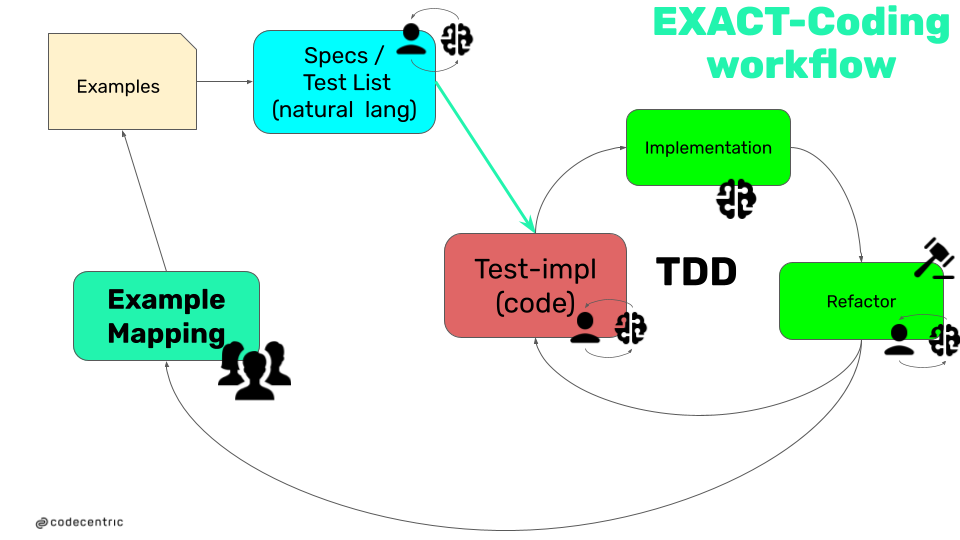
That is why the collaborative example mapping in EXACT interests me more than another TDD prompt. The workflow combines human modeling, natural-language test lists, and predictive TDD. Its reported experiments show improved correctness and code quality compared with unguided vibe coding or plain TDD prompts.
For an enterprise team, I would evaluate it against escaped defects and review effort—not just how quickly the agent finishes.
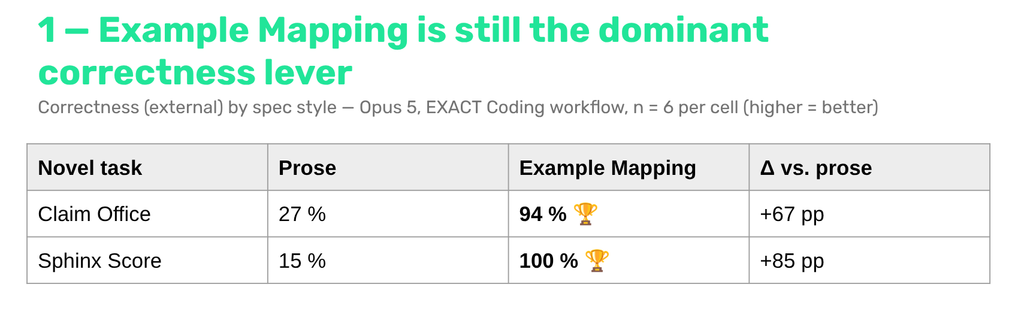
Like agreeing an API contract before implementing either side, EXACT puts collaborative definition of behaviour into the development workflow. The reported results make that worth testing; they do not remove the need to validate it against your own codebase. https://coding-is-like-cooking.info/2026/11/how-to-use-test-driven-development-with-ai-agents-without-lowering-code-quality/?utm_source=tldrit
Originally covered at coding-is-like-cooking.info ↗